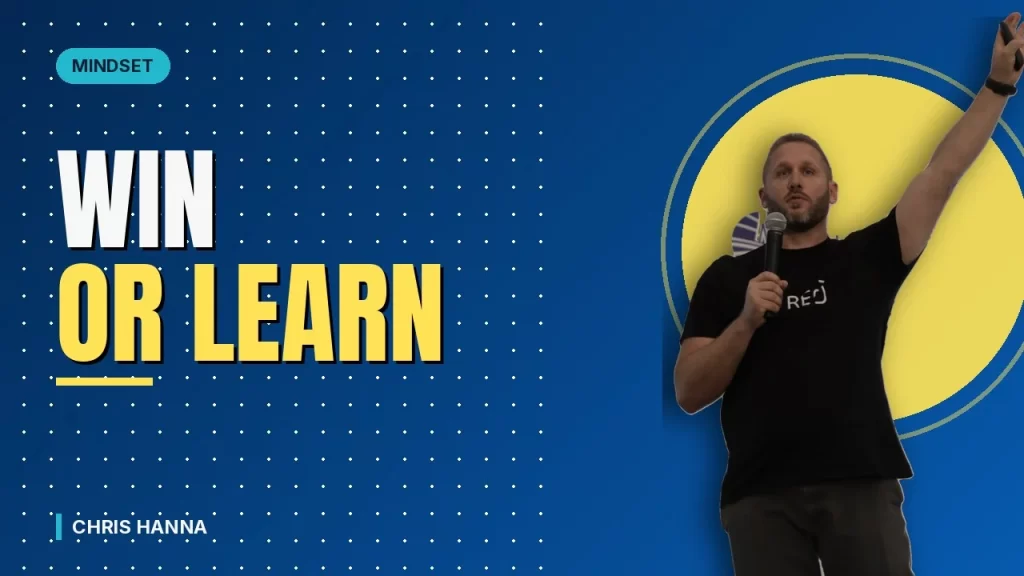
At some point I stopped using the word "failure" the way most people do. Not because I stopped failing. Trust me, I still screw things up all the time. I stopped because I realized the word was making me worse at taking risks. These days I go by a simpler rule: win or learn. In business and in life, you’re either winning or you’re learning. You’re never just losing.
It sounds like a bumper sticker. I get it. But the way you label a setback changes how you respond to it, and how you respond to setbacks decides almost everything about where you end up.
What Win or Learn Actually Means
Win or learn means every outcome gives you something. If it goes well, you win. If it doesn’t, you learn something you couldn’t have learned any other way, as long as you’re willing to look at it honestly.
The "as long as" part is important. Win or learn isn’t a way to pretend bad things didn’t happen. It’s a commitment to pull the lesson out of every result, especially the painful ones. If you don’t take the lesson, it really was just a loss.
This is where most people get it wrong. They hear "win or learn" and use it as a way to brush past a setback quickly. "Oh well, lesson learned," without ever saying what the lesson actually was. That’s not learning. That’s avoiding. Real learning is specific. It sounds like: I priced that project too low because I was scared of losing it, and next time I’ll hold my number. Or: I didn’t prepare enough, and next time I’ll start a month earlier. If you can’t name the lesson, you haven’t learned it yet.
Why the Word Failure Holds People Back
"Failure" is a heavy word. It sounds final. It sounds like a verdict on who you are, not just a description of how something turned out.
When people are scared of failure, they do a few predictable things. They avoid risks. They hide mistakes. They stick with things that aren’t working because quitting would feel like admitting defeat. They stop trying new things after one bad experience.
I did all of those things for years. And every one of them cost me more than the failures I was trying to avoid.
The irony is that avoiding failure doesn’t actually protect you from it. It just changes what kind of failure you get. Instead of the visible, short, painful kind, you get the slow kind: years of playing small, opportunities you never took, and a career or business that never becomes what it could have been. I’d take the fast, visible failures every time. At least those come with lessons.
Win or Learn in My Own Life
Getting Fired
I’ve been fired twice. The first time, I called it a failure, and it nearly broke me. The second time, I’d started thinking differently. It still stung, but I treated it as information. What did I learn? What do I want next? That shift is a big part of why I eventually walked away from a six-figure job to build my own business.
My First Business
My first company didn’t work out. I learned to test ideas before building them, to shut things down cleanly, and to stop falling in love with being a founder instead of building something people pay for. Those lessons built my next business. If I had labelled that company a failure and walked away from entrepreneurship, none of what I’ve built since would exist. The lesson was worth more than the company ever was.
The World Series of Poker
I didn’t play the way I wanted to at the World Series of Poker. I wasn’t prepared enough, and I let frustration get into my decisions. Painful? Yes. But it taught me more about discipline than any good week ever has.
Building a Studio
The studio was my biggest business bet, and parts of it didn’t go the way I planned. The lessons from that year reshaped how I run the company. Win or learn.
How to Actually Practice Win or Learn
Saying "win or learn" is easy. Living it takes a few habits.
Review Every Big Result
After any major win or setback, ask three questions. What went well? What didn’t? What will I do differently next time? Write the answers down.
Separate the Decision From the Outcome
Poker taught me this. You can make a great decision and get a bad result. Judge yourself on the quality of your thinking, not just how things turned out.
Talk About Lessons Out Loud
Share what you learned with your team, a mentor, or your audience. Saying it out loud locks it in, and it shows the people around you that mistakes are survivable.
Take the Next Shot
The whole point of learning is to use it. If a setback makes you stop trying, you didn’t learn. You just lost. Take what you learned and go again.
Win or Learn for Teams and Leaders
If you lead people, this mindset matters even more. Teams that are scared of failing hide problems, avoid risks, and stop bringing ideas forward. Teams that believe in win or learn speak up faster, fix problems earlier, and try more things.
You can’t fake this, though. If you say "win or learn" and then punish every mistake, nobody will believe you. Leaders have to model it first, by owning their own setbacks openly.
The Limits of Win or Learn
I want to be fair here. Win or learn isn’t permission to be careless. Some mistakes are expensive, and some hurt other people. The mindset doesn’t erase consequences. It changes what you do with them.
It also doesn’t mean you have to be happy about every setback. You’re allowed to be pissed off. Feel it. Then find the lesson and move. Being upset and being stuck are two different things. One lasts a day. The other can last years.
Why I Talk About This So Much
Win or learn is the closing line of my On Tilt talk, and it’s the idea I come back to more than any other. Because almost everyone I meet is holding back from something they want, out of fear that it might fail. If I can get one person to see that "failing" is really just learning with a bruise, that’s a good day.
FAQ: Win or Learn
Where does win or learn come from?
The idea has been shared by many coaches, athletes, and leaders over the years. It’s become a core part of how I approach poker, business, and life.
Isn’t this just positive thinking?
No. Positive thinking can ignore problems. Win or learn forces you to look at problems directly and pull something useful out of them.
How do I start using win or learn?
Next time something goes wrong, write down three things it taught you before you decide what to do next.
Bring Win or Learn to Your Audience
If your team, event, or podcast audience could use a better way to think about setbacks and risk, I’d love to talk. See my speaking topics or reach out directly.