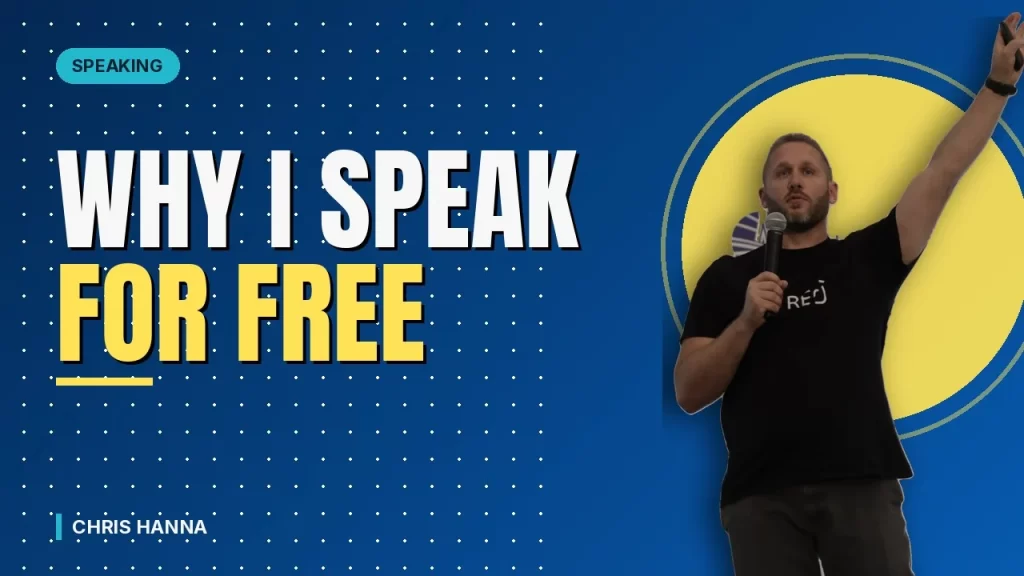
Speaking for free is one of the most argued-about topics among speakers. One camp says never do it, because it devalues the industry. The other camp says do it constantly, because exposure leads to paid work. I think both are partly wrong. I speak for free sometimes, on purpose, and I charge other times. Here’s exactly how I decide.
If you’re an event organizer reading this, I’m going to be honest about how I think, which will probably make it easier to work with me. If you’re a business owner thinking about speaking yourself, this is the framework I wish I’d had.
Why I Say Yes to Speaking for Free
Being in Front of the Room Is Valuable
Some of the workshops I deliver for chambers and business partners are free. That’s deliberate. Standing in front of a room of business owners for 45 minutes is worth a lot to me. They get to see how I think, what I know, and whether they’d want to work with me. You can’t buy that kind of trust with an ad.
It Builds the Speaking Muscle
Nobody becomes a great speaker without reps. Free talks, especially early on, let you sharpen your material, find out what lands, and get comfortable on stage.
It Creates Content
A talk can become a dozen short videos, a podcast episode, and a blog post. I’ve recorded events before and turned them into a whole series of social clips. That content keeps working long after the event.
It Opens Doors
Free talks often lead to paid talks, introductions, clients, and podcast invitations. Not every time. But often enough that the right free talks are a smart investment.
And honestly, I enjoy it. There’s a particular kind of energy when you can see a room full of business owners start nodding at something you’ve said. That feedback tells me which ideas land and which ones need work. I’ve rewritten parts of my talks because of how a free audience reacted, and those changes made my paid talks better.
The Honest Downside of Speaking for Free
I’ll be real. Speaking for free doesn’t always pay off. I’ve spoken at events that raised my profile, got me compliments, and produced exactly zero revenue. A great reception doesn’t automatically turn into business.
Free talks also take real time. Prep, travel, the event itself, follow-up. If you say yes to everything, you’ll spend a lot of hours performing for rooms that were never going to become clients.
And there’s a risk of being typecast. If certain organizers only ever know you as the free speaker, it can be hard to get them to pay you later. I’ve had experiences where suggesting a modest fee got shut down immediately.
How I Decide When Speaking for Free Makes Sense
Here’s my actual filter.
- Is the audience made up of people who could hire me or refer me?
- Will I be able to connect with attendees afterward?
- Can I record the talk or create content from it?
- Is it a relationship I want to build long term?
- Does it help me test or improve material I’ll use in paid talks?
If the answer to most of those is yes, I’ll often do it for free. If most are no, I either charge or pass.
The filter keeps me honest. Without it, I’d say yes to everything, because it’s flattering to be asked. With it, I can see quickly whether a free talk is an investment or just a favour. Both can be fine. I just want to know which one I’m making.
When I Charge
I charge when the event is selling tickets, when it’s a corporate team event, when the audience isn’t likely to become clients, or when the talk requires custom preparation. In those situations, the value I’m providing is the talk itself, and that’s worth paying for.
I also charge more as demand grows. That’s normal for any service. The more you’re asked, the more your time is worth.
Tips for Anyone Considering Speaking for Free
Ask for Something in Return
If you’re not getting paid, ask for something else. Permission to record. The attendee list or a way to follow up. A testimonial. A spot in the event’s promotion. Organizers often say yes to these.
Recording rights are the one I push for most. A well-recorded talk is worth far more than the hour you spent giving it, because it becomes content you can use for months. If an organizer won’t pay you, being able to record and share the talk can make the whole thing worthwhile.
Have a Next Step Ready
Give attendees a clear way to keep in touch with you: a resource, a follow-up offer, or a simple way to connect. A free talk without a next step is just a performance.
Follow Up Fast
Reach out to people you met within a day or two, while the talk is fresh in their minds.
Track What Happens
Keep notes on which talks led to anything. After a year, you’ll know exactly which kinds of events are worth your free time.
A Note to Event Organizers
If you’re organizing an event and wondering whether to reach out, please do. I’m open to free and paid opportunities depending on the audience and format, and I’ll always tell you honestly which one makes sense. I’d rather have that conversation openly than have you assume I’m out of reach or that I’ll do anything for free.
I speak on betting on yourself, going all in, handling tilt and emotional decisions, getting fired and starting over, and what it really takes to build a business. Every talk is built on real stories, not slides full of quotes.
I also run my own video and podcast company, so if your event wants the talk recorded and turned into clips for your audience, that’s something we can talk about too.
FAQ: Speaking for Free
Should new speakers speak for free?
Often, yes, to build experience and material. Just be selective about the audience and ask for something in return.
Does speaking for free devalue speakers?
It can if you never charge. Used strategically, free talks are a marketing investment, not a statement about your value.
How do I start charging for talks?
Start charging for events that sell tickets or serve corporate teams, and raise your rate as demand grows.
Be clear and confident when you name your fee. Organizers respect speakers who know their value, and the right ones will tell you honestly what they can afford. That honesty makes everything easier.
Want Me at Your Event?
If you’re putting together an event, workshop, or podcast and think your audience would connect with my story, see my speaking topics or reach out directly. Let’s figure out what works.
Even if you’re not sure whether your budget allows for a paid speaker, send me a note anyway. Tell me about your audience and what you’re hoping they walk away with. Sometimes the right answer is a free workshop, sometimes it’s a paid keynote, and sometimes it’s a recorded session your members can watch later. We’ll find the version that makes sense for both of us.