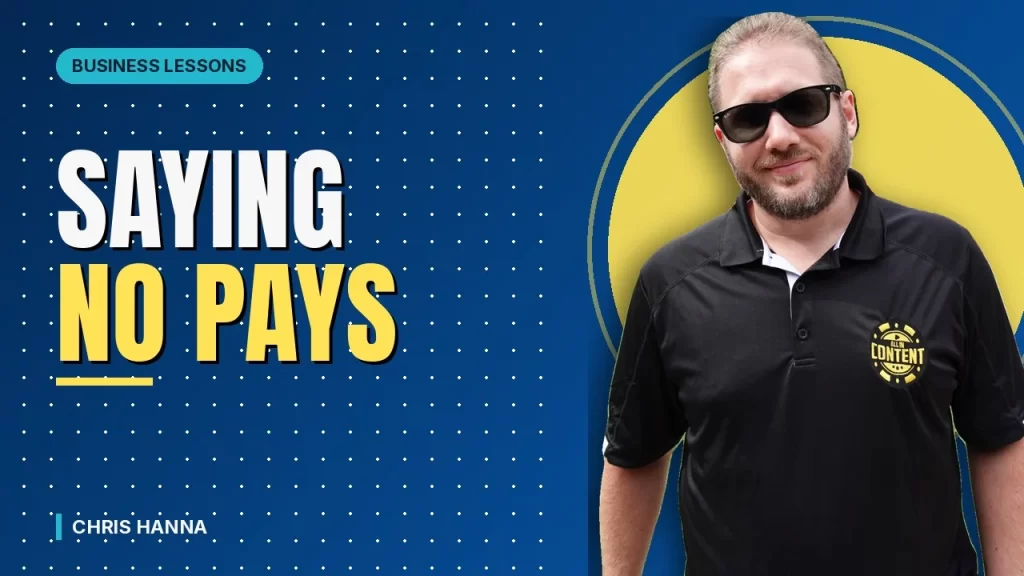
When you’re building a service business, every inquiry feels like oxygen. So saying no to clients feels insane. Why would you turn down money? But I’ve learned that some of the most important decisions I’ve made in my business were the times I said no, and some of my worst were the times I should have.
Nobody teaches you this. Business advice is all about getting more clients. Very little of it is about choosing the right ones. Here’s how I think about saying no, the lines I’ve drawn, and why they’ve made the business better.
Why Saying No to Clients Is So Hard
Fear. That’s the honest answer. When money is tight, or a slow month is coming, every yes feels like safety. Turning anyone away feels like you’re throwing away a lifeline.
There’s also ego. Being wanted feels good. Saying no can feel arrogant, like you think you’re too good for the work. And a lot of service business owners are people-pleasers who hate disappointing anyone.
I’ve felt all of that. I’ve said yes to work I knew wasn’t right because I was nervous about the next month. Almost every time, I regretted it.
The pattern was always the same. The project would start fine, then drift. Expectations would grow beyond what we’d agreed. The work wouldn’t really fit our process, so it took longer than it should have. And by the end, neither of us was thrilled. Looking back, the warning signs were there on the very first call. I just didn’t want to see them because I wanted the revenue.
What Saying Yes to the Wrong Clients Costs You
- Time you could have spent on better clients.
- Stress, because bad-fit clients are usually the most demanding.
- Profit, because they often push for more work at lower prices.
- Focus, because they pull your business away from what you do best.
- Reputation, because unhappy clients talk, even when the mismatch wasn’t your fault.
A bad-fit client doesn’t just cost you their project. They cost you the energy you’d have spent finding and serving a great one.
The Lines I’ve Drawn When Saying No to Clients
Over time, I’ve built a list of things I simply don’t do. Having those lines decided in advance makes saying no much easier, because I’m not deciding emotionally in the moment.
Work Outside What We Do Best
All In Content used to do websites. We don’t anymore. Every service you add pulls focus from the ones you’re great at, so I’ve narrowed down to batch video creation, social media management, and podcast production.
Content Categories We Won’t Touch
There are certain types of content we don’t produce, post, or manage in any capacity. That’s a firm line based on our contracts and our insurance. It’s not a judgment call I revisit each time someone asks.
Deliverables Outside Our Model
We don’t hand over raw camera footage, and we don’t offer certain specialized post-production work. Those decisions keep our process clean and our quality consistent. Clients who need those things are better served elsewhere, and I tell them so.
I’ll be honest that I’ve also been tempted by projects like editing footage that clients already have sitting in their drives. It’s work, and it’s money. But I’ve learned I’d rather record and edit what we shoot ourselves, because that’s where we control the quality and deliver our best work. Knowing that makes those conversations easier.
Scope That Turns Us Into Something We’re Not
I’ve learned the hard way that saying yes to do-everything packages turned my business into a full-service agency I never wanted to run. Now, if a client wants us to be their entire marketing department, I’m honest that it’s not what we’re built for.
How I Decide When Saying No to Clients Is the Right Call
- Does this work fit what we do best?
- Can we deliver it well and profitably?
- Does this client respect the process and the price?
- Will this project make the business stronger, or just bigger?
- Would I be excited to show this work to the next client?
That last question is underrated. If you wouldn’t proudly show the finished work to future clients, ask yourself why you’re taking it on. Your portfolio is built from your yeses.
Over time, the work you say yes to decides what kind of business you become. Choose it on purpose, not out of fear of an empty calendar.
If most of the answers are no, I say no, no matter how much I’d like the revenue.
How to Say No Without Burning the Bridge
Be Quick
Don’t leave people hanging. A fast, clear no is more respectful than a slow, vague maybe.
Be Honest About Why
You don’t need to over-explain. "That’s not something we do" or "I don’t think we’re the right fit for this" is enough.
Point Them Somewhere Useful
If you know someone who’d be a better fit, recommend them. People remember that kindness, and it often comes back around.
I’ve had referrals come back to me from people I turned away, simply because I was honest and helpful when I said no.
Leave the Door Open
Sometimes the timing or budget isn’t right yet, but could be later. Let them know you’d love to revisit it if things change.
What Happened When I Started Saying No to Clients
The business got clearer. It got easier to explain what we do and who we do it for. Projects got smoother because they fit our process. And the clients we did take on were a better match, which made the work more enjoyable for everyone.
I won’t pretend it was painless. There were months where saying no meant less money in the short term. But every time I’ve held the line, the business has been healthier for it.
Saying No Is a Leadership Skill
If you lead a team, saying no protects them too. Every bad-fit client lands on someone’s desk. When you’re willing to turn the wrong work away, you’re telling your team that their time and energy matter. That’s worth more than one extra invoice.
It also sets a standard. When the team sees you protect the business from bad fits, they start doing the same, flagging warning signs early and pushing back on scope creep before it becomes a problem.
FAQ: Saying No to Clients
How do I know if a client is a bad fit?
Warning signs include pushing hard on price, wanting work outside your core services, disrespecting your process, and unclear or constantly changing expectations.
Isn’t it risky to turn down work when money is tight?
It can feel that way. But bad-fit clients often cost more in time and stress than they bring in. Decide your lines in advance so you’re not choosing out of fear.
How do I say no politely?
Be quick, be honest, keep it short, and recommend someone else if you can.
Want to Talk Through Your Own Lines?
If you’re running a service business and struggling to say no, learn about coaching with me. And if your audience could use an honest talk about building a business that fits the life you want, see my speaking topics.