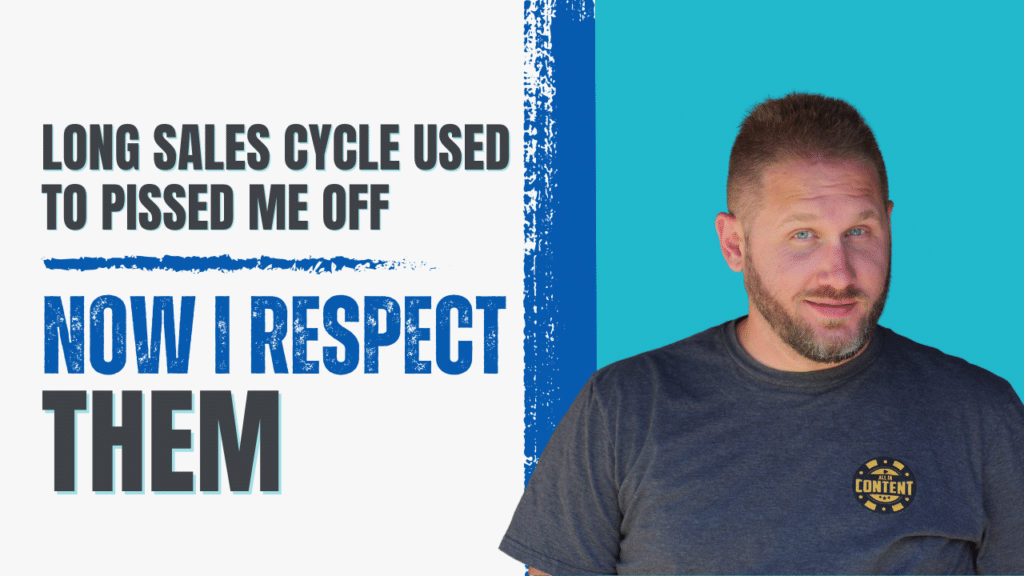
I used to hate long sales cycles.
Waiting. Following up. Silence in between.
It felt inefficient. It felt like rejection. It felt like wasted time.
I wanted quick decisions. Clear yes or no. Momentum.
What I didn’t realize then was simple.
Long sales cycles weren’t the problem. My impatience was.
Early on, speed feels like validation
When you’re building, fast yeses feel good.
They tell you:
- you’re doing something right
- the offer makes sense
- people want what you’re selling
So when decisions take weeks or months, it messes with your confidence.
You assume:
- they’re not serious
- they’re shopping you
- you’re about to get ghosted
Most of the time, that assumption is wrong.
Serious decisions take time — especially at higher levels
Here’s the truth I learned the hard way. The more thoughtful the client, the slower the decision.
People with:
- budgets
- teams
- reputations
- real consequences
Don’t impulse buy.
They evaluate. They wait. They test alignment.
That’s not disrespect. That’s maturity.
I used to try to “speed things up” — and it backfired
I tried everything.
Extra follow-ups. More explanation. More urgency.
All it did was make me look insecure.
Pressure doesn’t shorten long sales cycles. It exposes desperation.
Once I stopped trying to control timing, conversations got cleaner.
Ghosting isn’t always ghosting
This one took me a while.
Silence doesn’t always mean no. It usually means:
- priorities shifted
- internal conversations are happening
- timing isn’t right yet
People don’t owe you updates every step of the way. They’re running businesses too.
When I accepted that, the resentment disappeared.
Some people disappear — then come back months later
This used to confuse the hell out of me.
I’d assume a deal was dead. Then months later: “Hey, are you still doing this?”
They tried cheaper. They tried DIY. They tried other options.
And now they understood the value.
That’s not a failure. That’s the process working.
Long sales cycles filter bad fits automatically
Here’s the upside no one talks about.
Long cycles weed out:
- impulsive buyers
- misaligned expectations
- people looking for quick fixes
What’s left are clients who:
- understand the commitment
- respect the process
- value expertise
That trade-off is worth the wait.
I stopped selling and started letting people decide
This shift changed everything.
I stopped convincing. I stopped chasing. I stopped managing other people’s timelines. I presented clearly. I answered honestly. And I stepped back.
The right people moved forward. The rest didn’t. Both outcomes were fine.
Respecting the cycle reduced emotional whiplash
Once I accepted long sales cycles as normal:
- confidence stabilized
- follow-ups felt neutral
- outcomes mattered less emotionally
That calm made me better in conversations. Ironically, it also made deals close faster.
Cheap options are part of the education process
This one stings at first. Some prospects need to try cheaper options before they’re ready.
You can’t shortcut that. You can’t argue them out of it. Letting them go isn’t losing. It’s letting reality teach the lesson.
Some come back. Some don’t. Either way, you didn’t lower your standards.
Timing matters more than persuasion
This was the biggest realization.Most deals aren’t lost on value. They’re delayed on timing.When timing aligns, decisions feel obvious. Until then, pressure just creates friction.
Your job isn’t to force readiness. It’s to be clear when it shows up.
Long sales cycles reward confidence
The people who win long-term don’t rush. They:
- trust their positioning
- respect the buyer’s process
- don’t attach ego to outcomes
That confidence shows. And people respond to it.
Final thought
Long sales cycles used to frustrate me. Now I see them for what they are.
A filter. A qualifier. A sign that the decision actually matters.
Fast yeses feel good. Thoughtful yeses build better businesses. Once I learned to respect the cycle, sales stopped feeling personal. They started feeling professional.