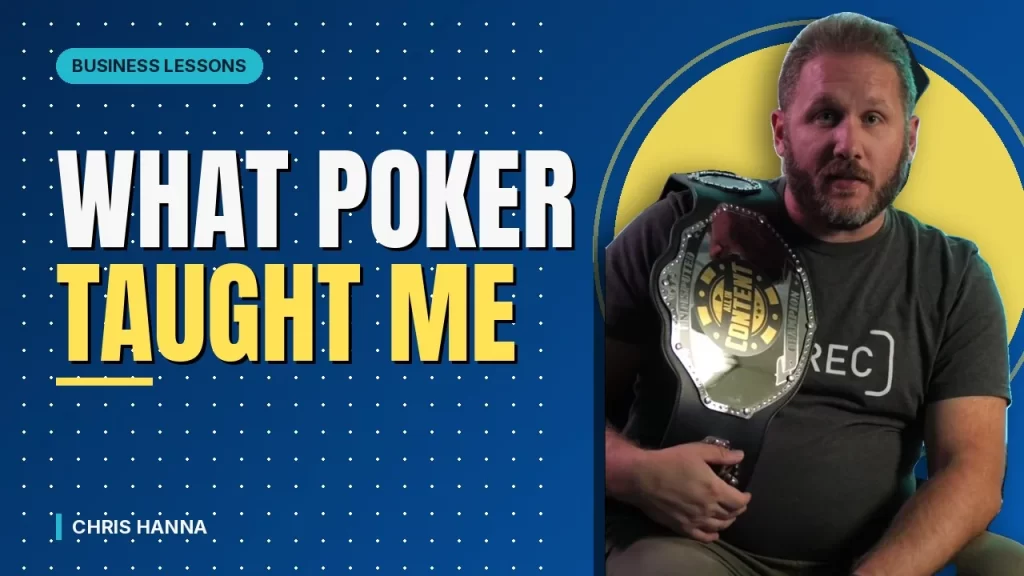
People are always a little surprised when they find out how seriously I take poker. They shouldn’t be. Poker and business have so much in common that I honestly think the table has taught me more about running a company than most business books have.
I’ve played for years, including at the World Series of Poker, which was a bucket list moment. I’m not telling you that to brag. I’m telling you because almost every lesson I’ve learned at the table has shown up again in my business, usually at the worst possible moment. Here are the big ones.
Why Poker and Business Are So Similar
Both are games of incomplete information. You never know exactly what the other side is holding. You have to make decisions with the information you have, under pressure, with real money on the line, knowing that even a great decision can lose.
That last part is what most people struggle with. In poker and business, the quality of your decision and the outcome are two completely different things. Once you really understand that, everything changes.
Lesson 1: Judge Decisions, Not Results
In poker, you can play a hand perfectly and still lose. You can play like an idiot and win. Over one hand, luck dominates. Over thousands of hands, good decisions win.
Business is the same. You can make a smart call and have it blow up because of something you couldn’t control. You can make a dumb call and get lucky. If you judge yourself only on results, you’ll learn the wrong lessons. Ask instead: given what I knew at the time, was that a good decision? That question has saved me from overreacting more times than I can count.
Lesson 2: Manage Your Bankroll Like Your Business Depends on It
Every serious poker player knows that you can be the best player at the table and still go broke if you play stakes you can’t afford. That’s bankroll management, and it’s just cash flow management with cards.
In business, I’ve learned to never bet so much on one thing that a single bad outcome can take me out. Keep reserves. Don’t put every dollar on one client, one service, or one idea. The goal is to stay in the game long enough for good decisions to pay off.
Lesson 3: Know When to Fold
Folding is poker’s most underrated skill. Beginners hate folding because it feels like giving up. Good players fold constantly because they know that getting out of a bad hand early saves the money they’ll need for a good one.
In business, folding means walking away from a project, a client, a service, or an idea that isn’t working, before it eats more of your time and money. I’ve held onto bad hands in business way too long because I’d already invested so much. That’s called the sunk cost trap, and it’s expensive as hell. Sometimes the smartest move is to fold and wait for a better spot.
Lesson 4: Pick the Right Table
A good poker player at a table full of better players is a losing player. Table selection, choosing where you play, matters as much as how you play.
In business, that’s your market and your clients. You can be great at what you do and still struggle if you’re competing in the wrong space or chasing customers who can’t afford you. Choosing where to play is a strategy decision, not an afterthought.
Lesson 5: Read People, Not Just Cards
At the table, you’re constantly watching how people act, what they say, and how they bet. Over time, you get a feel for when someone’s confident and when they’re scared.
Business is a people game too. Learning to read what a client really wants, what’s behind an objection, or when a deal is about to go sideways is a skill you build the same way: by paying close attention, over and over.
Lesson 6: Patience Pays More Than Aggression
New players think poker is about big bluffs and huge pots. Experienced players know most of the game is waiting. Folding hand after hand until the right spot shows up, then committing fully.
That’s how I think about business now. Most days aren’t exciting. You show up, do the work, stay consistent, and wait for the opportunity. When it comes, you go all in. That’s literally where my company’s name comes from.
Lesson 7: Play Your Own Game
Every table has players trying to look busy, make flashy moves, or copy whatever the last big winner did. The good players ignore all of that. They know their strengths, they play their style, and they don’t get pulled into somebody else’s game.
In business, it’s easy to get distracted by what everyone else is doing. A competitor launches something, a guru posts a new tactic, someone online claims they made a fortune doing something completely different from you. If you chase every one of those, you never get good at your own game. I’ve made that mistake. I’ve spread myself too thin chasing shiny ideas instead of doubling down on what actually works for my business. The fix is the same as at the table: know what you’re good at, play that hand, and let other people make their own mistakes.
Where Poker and Business Are Different
I’ll be honest about the limits of the comparison. In poker, the other players are trying to take your money. In business, the best deals happen when both sides win. Treating every client like an opponent is a great way to end up with no clients.
And in business, you get to change the game. You can improve your product, build relationships, and create advantages that don’t exist at a poker table. Poker teaches you how to think. Business lets you build. The best part is that the thinking makes the building a lot less painful.
If you’ve never played, try a friendly home game with low stakes and pay attention to how you feel when you lose a hand you should have won. That feeling is the same one you’ll get in business. Learning to sit with it calmly is half the battle.
The Poker and Business Lesson I’m Still Learning
If I’m being real, my biggest weakness at the table has been emotional control. Letting a bad beat get into my head and make my next decision for me. Poker players call that being on tilt, and I’ve seen it show up in my business too. It’s important enough that I’ve built a whole talk around it. I’ll write about it separately, because it deserves its own post.
FAQ: Poker and Business
Do you need to play poker to learn these lessons?
No. But even casual play makes the lessons stick, because you feel the consequences of your decisions in real time.
What’s the most useful poker lesson for business owners?
Separate decisions from outcomes. It stops you from overreacting to short-term wins and losses.
Is poker gambling or skill?
Over the short term, luck plays a big role. Over the long term, skill wins. Business works the same way.
Want These Lessons in Your Room?
Poker, risk, and going all in are the backbone of my talks. If your event, team, or podcast wants a speaker who’ll bring real stories instead of slides full of quotes, check out my speaking topics or reach out