I didn’t set out to build a personal brand.
I didn’t wake up one day thinking, “I should post more so people know who I am.”
That framing is already wrong. I built a personal brand because I was tired of other people controlling the narrative.
When you don’t control the story, someone else will
Early on, my business existed in fragments.
People knew:
- the company name
- maybe a service
- maybe a referral source
But they didn’t know:
- How I think
- What I believe
- What I won’t tolerate
- Where I draw lines
So they filled in the gaps themselves.
That’s dangerous.
When you’re not visible, assumptions replace reality.
“I don’t want the attention” is usually fear in disguise
I hear this all the time.
“I don’t want to be out there.”
“I don’t need attention.”
“I just want to do good work.”
That sounds noble. It’s usually bullshit.
What people actually mean is:
- They don’t want to be judged
- They don’t want to be misunderstood
- They don’t want to be wrong publicly
Silence feels safer than exposure.
But safety doesn’t build leverage.
A personal brand is a filter, not a megaphone
This is the part most people miss.
A real personal brand doesn’t attract everyone.
It repels the wrong people.
The clearer I became publicly:
- the fewer bad-fit conversations I had
- the fewer bullshit opportunities showed up
- the less I had to explain myself
That’s not attention. That’s control.
Being known for something is more valuable than being liked
At some point, you have to decide.
Do you want to be:
- agreeable
- palatable
- inoffensive
Or do you want to be understood?
You don’t get both.
Every time I softened a take to avoid friction, the message weakened. Every time I said exactly what I believed, the right people leaned in.That trade-off is unavoidable.
Visibility removes desperation from decisions
Here’s something no one talks about.
When people already know who you are and how you think:
- You don’t chase
- You don’t beg
- You don’t over-explain
Opportunities come pre-qualified.
That changes how you sell. It changes how you price. It changes what you tolerate.
That’s power most business owners never experience.
Personal brand protects you when things get quiet
Feast-or-famine is real. Slow periods happen.
When they do, a personal brand:
- keeps conversations warm
- keeps you top of mind
- keeps trust alive even when you’re not selling
Without that, every slow period feels like starting from zero.
I have zero interest in rebuilding from scratch every time the market shifts.
This isn’t about ego — it’s about survival
Let’s be clear.
This isn’t influencer shit. This isn’t vanity. This isn’t chasing likes.
It’s about not letting:
- platforms
- referrals
- algorithms
- Other people’s opinions dictate whether your business lives or dies.
If your entire pipeline disappears because one channel dries up, you don’t have a brand. You have a dependency.
Building in public keeps me honest
When you say things publicly, you’re forced to live up to them.
You can’t hide behind excuses. You can’t quietly pivot without accountability. You can’t bullshit yourself for long.
That pressure is uncomfortable. It’s also useful.
It sharpens decision-making fast.
The right people recognize themselves in your content
The goal was never mass appeal.
The goal was resonance.
When the right people read something I write, they don’t say: “This is interesting.”
They say: “Yeah. That’s exactly it.”
Those are the people I want in my world. As clients. As partners. As event organizers.
Everyone else can scroll past.
Speaking opportunities come from clarity, not volume
Here’s something most people get wrong.
Event organizers don’t look for:
- the loudest voices
- the biggest followings
- the most polished speakers
They look for:
- conviction
- lived experience
- someone who can hold a room without hiding
A personal brand is created before you ever step on stage.
Control compounds over time
The longer I showed up consistently:
- The easier conversations became
- The fewer explanations were needed
- The more aligned opportunities appeared
That didn’t happen overnight. But it happened predictably.
Control always compounds. So does avoidance.
Final thought
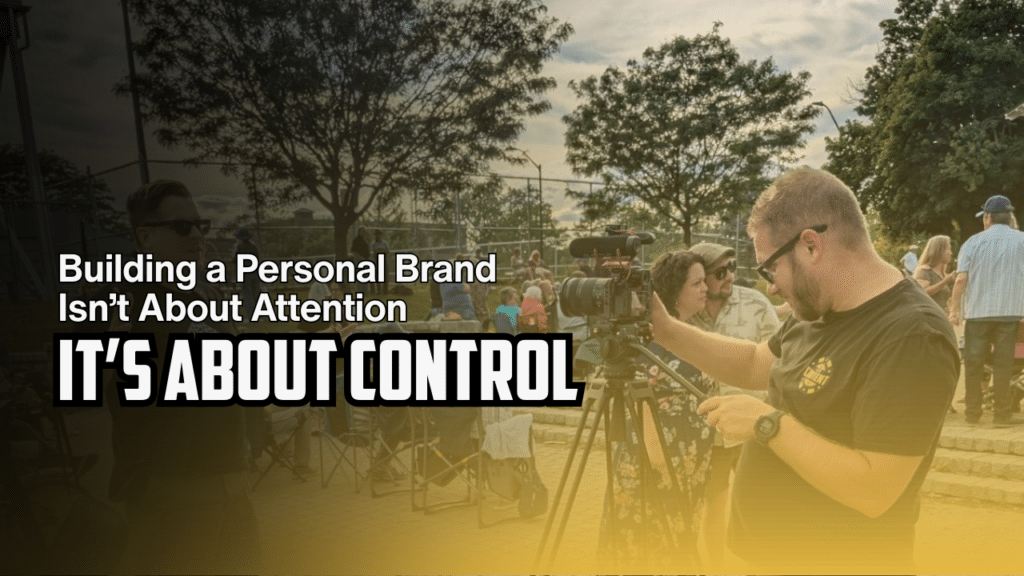
Building a personal brand isn’t about being seen.
It’s about deciding how you’re seen.
If you don’t define your position publicly, the market will define it for you. And it won’t ask your permission. I’d rather be misunderstood by a few than invisible to everyone.
That’s not ego. That’s strategy.