If you’ve been in business long enough, you know this feeling.
One month feels unstoppable. Leads everywhere. Momentum high. Confidence locked in.
Then… silence.
No emails. No bookings. No urgency from prospects.
Early on, that swing used to mess with my head badly.
Now it doesn’t.
The first slow period feels like failure
When you’re new, feast-or-famine feels personal.
You don’t think: “This is business.”
You think:
- “I broke something.”
- “I did something wrong.”
- “I’m about to lose everything.”
That panic drives terrible decisions.
Discounting. Overcommitting. Saying yes to work you shouldn’t touch. I did all of it.
Volatility isn’t a sign that something’s wrong
Here’s the part most people don’t understand until they’ve lived it.
Volatility is normal.
Especially when:
- You sell higher-ticket services
- You work with decision-makers
- Your sales cycles aren’t impulse buys
Quiet doesn’t mean dead. It usually means delayed.
I used to mistake silence for rejection
This was my biggest error early on.
No response felt like a no. No urgency felt like disinterest. No immediate win felt like a loss.
That interpretation made me reactive. And reaction is how you weaken your positioning fast.
Feast-or-famine punishes emotional decision-makers
The swings don’t hurt everyone equally.
They destroy business owners who:
- tie confidence to daily activity
- need constant validation
- Rely on momentum to feel safe
If your nervous system can’t handle quiet, you’ll sabotage yourself every time it shows up.
Every slow period taught me the same lesson
The lesson wasn’t: “Market harder.”
It was: “Stabilize emotionally.”
When I stayed calm:
- deals reopened
- conversations resumed
- opportunities surfaced
Often from places I thought were dead. Panic never helped. Patience did.
Long-term businesses are built by people who don’t flinch
Here’s what I’ve noticed. The people who last:
- don’t overreact to silence,
- don’t spike when things are good
- don’t spiral when things slow
They treat volatility like weather. You don’t take it personally. You prepare for it.
Feast periods lie to you, too
This part doesn’t get talked about enough. Feast periods are just as dangerous.
When things are busy, you convince yourself:
- It’ll always feel like this
- The pipeline is permanent
- You can relax on fundamentals
That’s when people get sloppy. That’s when systems break. That’s when overconfidence creeps in.
I stopped forecasting emotionally
One of the best decisions I made was this: I stopped assuming the future based on the last two weeks. Quiet weeks don’t mean collapse. Busy weeks don’t mean stability. They mean nothing by themselves. Patterns matter. Not moments.
What actually helped me ride the swings
A few things changed everything:
- clear positioning
- strong personal brand
- consistent visibility
- controlled environment (the studio)
Those don’t eliminate volatility. They soften the extremes.
And that’s the goal.
Panic is expensive even when nothing breaks
Even when panic doesn’t kill the business, it costs you:
- confidence
- energy
- clarity
You make decisions out of fear rather than strategy. Most of the damage happens internally, not externally.
I trust the cycle now.
This is the difference. I don’t assume slow means broken. I don’t assume busy means safe. I trust the cycle . Every time I thought it would be quiet, something showed up. Not always immediately. But predictably.
That trust changes how you show up.
This mindset made sales cleaner.
Once I stopped panicking:
- I stopped chasing
- I stopped discounting
- I stopped explaining myself
Confidence returned. And ironically, deals closed faster. Desperation repels. Calm attracts.
Final thought
Feast-or-famine isn’t a flaw in your business. It’s the tax you pay for not playing small. The goal isn’t to eliminate volatility. It’sabout stoppingg itfrom controllingl you.
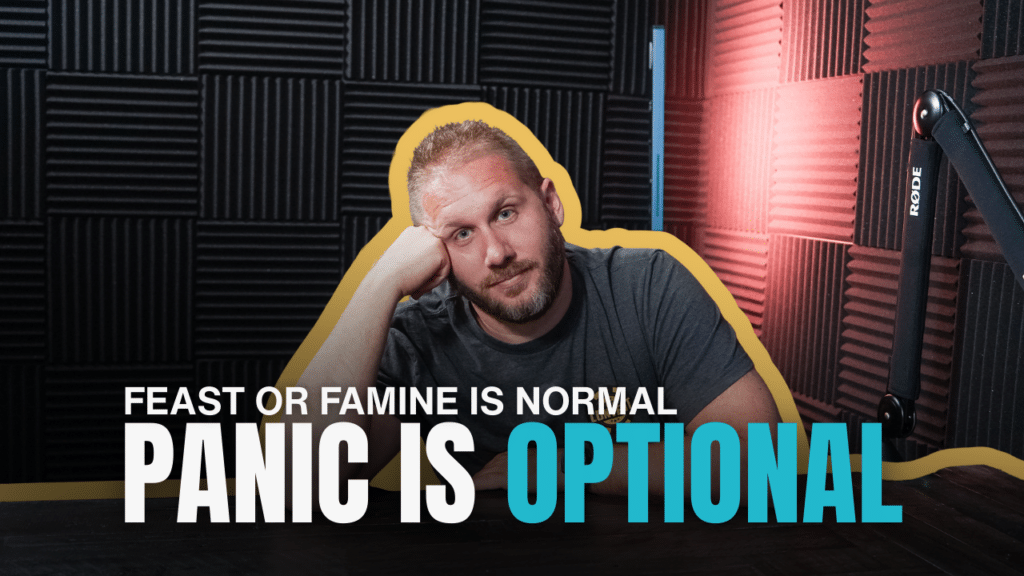
Quiet periods don’t mean you’re failing. They mean you’re building something real. Panic is optional. Experience teaches you that.